ROLE
Lead Product Designer
TIMELINE
Aug 2024 - Dec 2024
TEAM
1 PM
5 Designers
DISCIPLINE
Product Strategy
User Flow
User Research
I led the design of Campus Circle, a localized marketplace designed to boost transactions through addressing key user needs and pain points uncovered from user research.
Campus Circle

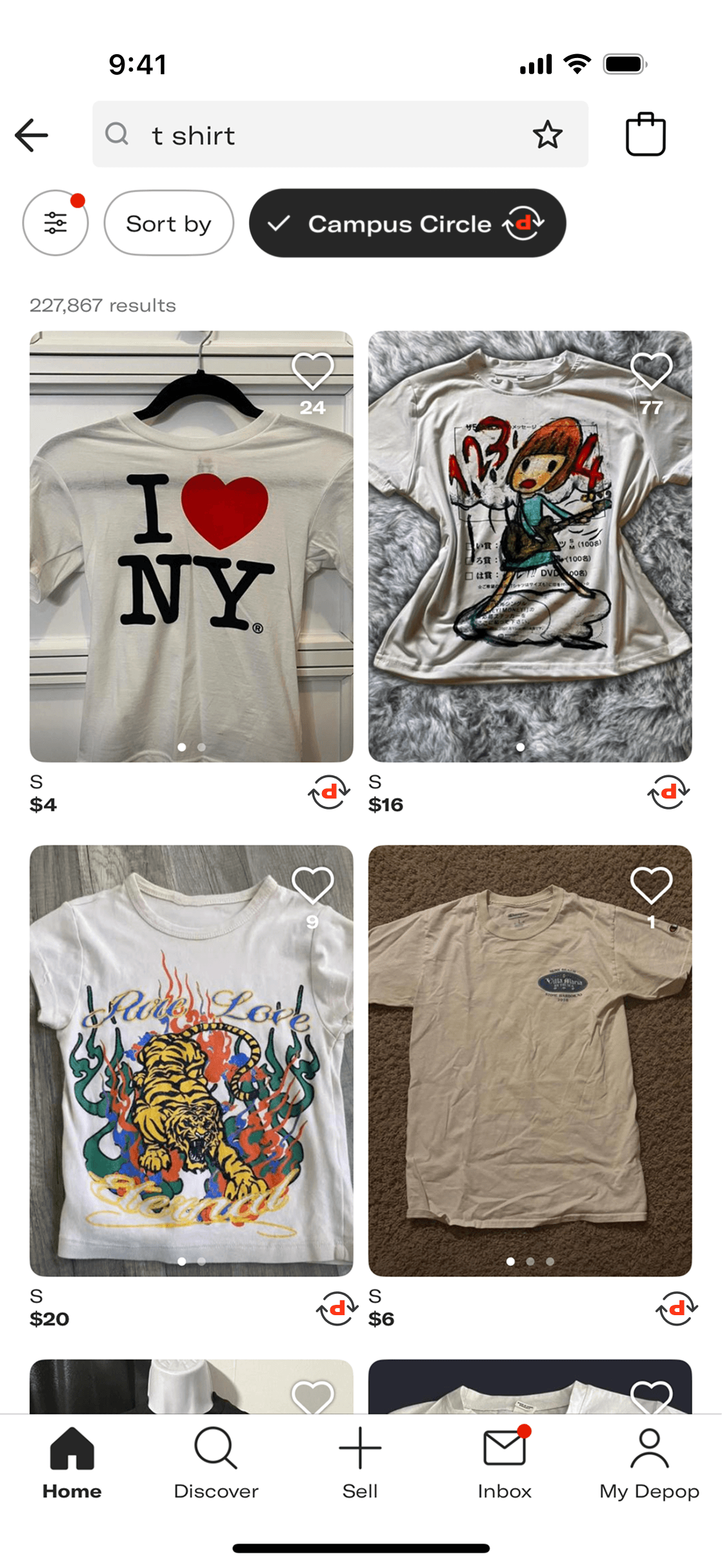
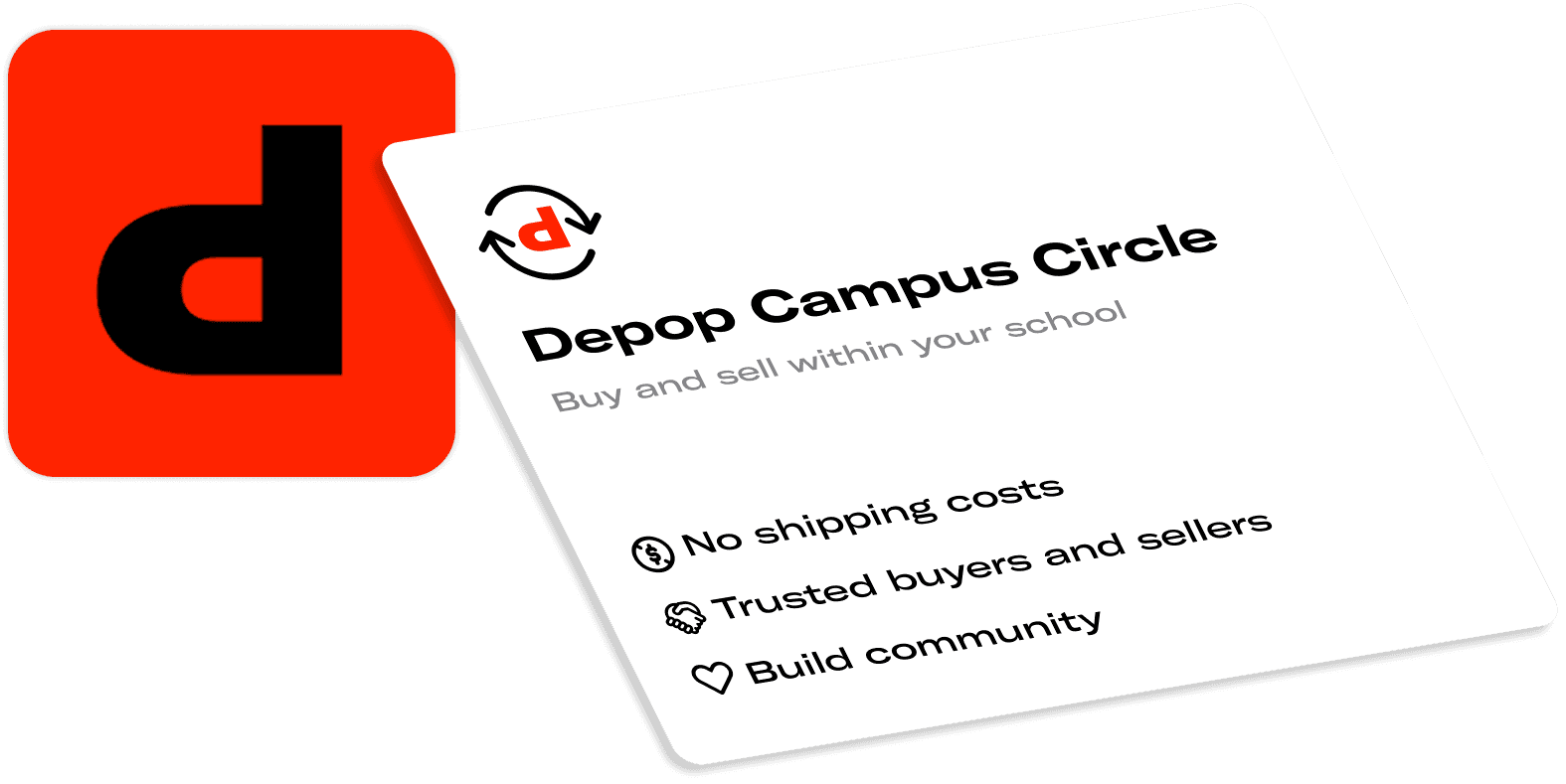
Campus Circle eliminate the hassle and stigma around shipping, reduces buyer fees/friction, and leans into the social nature of thrifting for students.

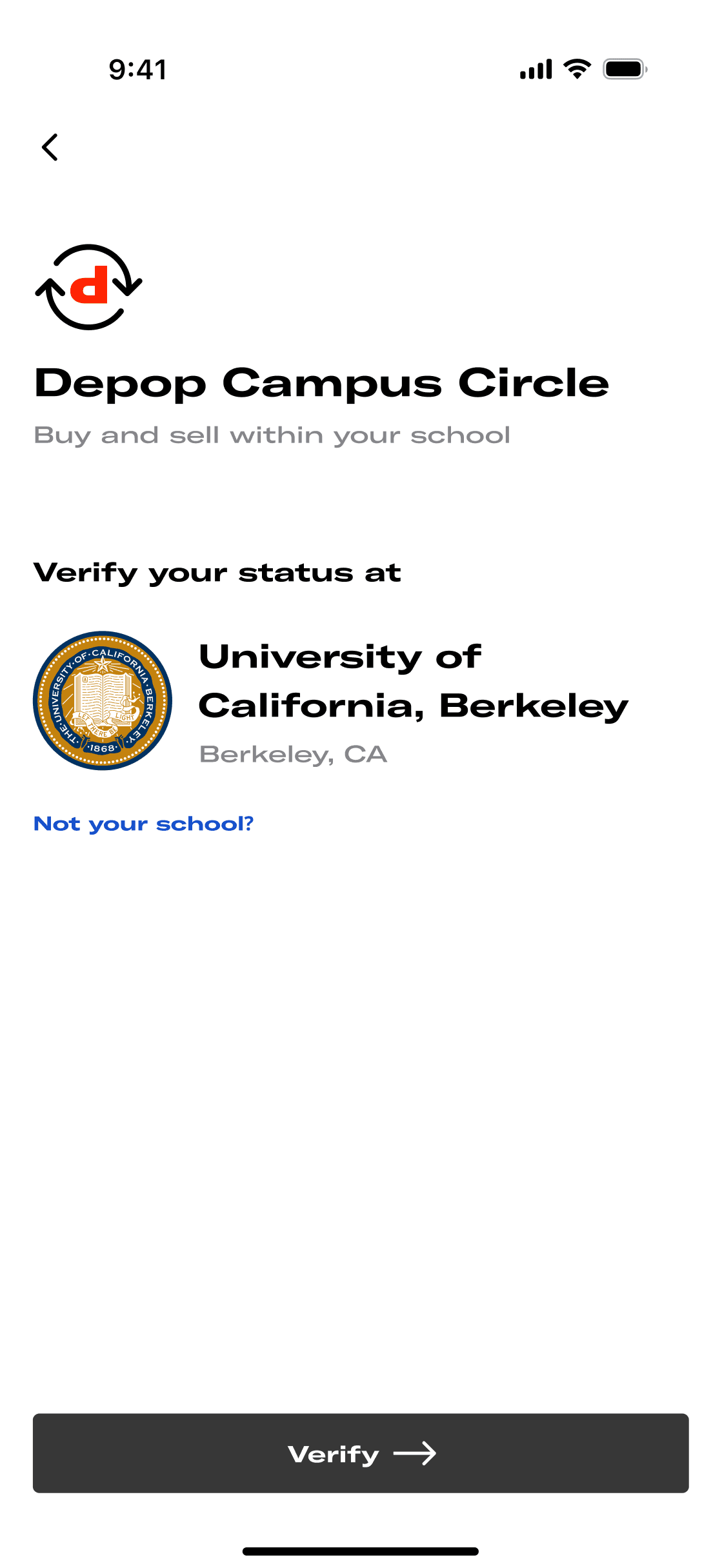
Meetups with strangers can be scary. To alleviate these concerns, I designed an onboarding flow that would require students to verify their student status for their college.
This would both ensure the listings are actually local to their campus, as well as provide a more trustworthy experience for users.
Contextual modules to bring a student-life lens to categories for relevance
Through our research, we uncovered that campus events such as rush week, game days, and holidays spur shopping for students.
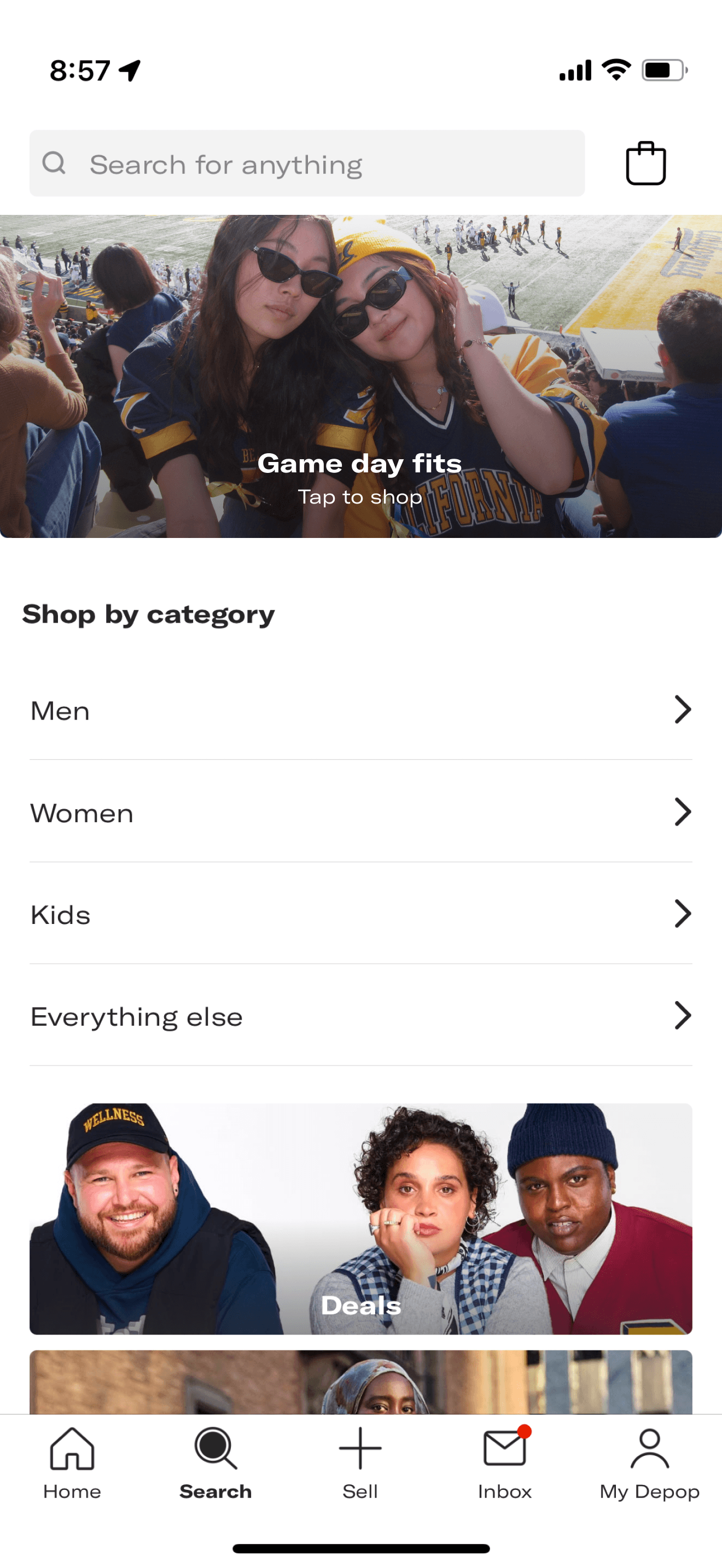
This contextual module makes it easy to shop for moments vs. isolated items.
A win-win solutions for college students
Depop Campus Circle moves the needle for Depop by addressing friction students face, while also building community.
Our team presented this solution to 10+ stakeholders, earning high praise for its innovative, user-centric approach. Furthermore, 90% of student testers expressed strong interest in this feature, indicating strong product-market fit.
CONTEXT
Make Depop the go-to destination for college students
This was the ultimate goal as our team was tasked to conduct extensive ethnographic research on American college students for Depop.

As a youthful, peer-to-peer fashion marketplace with over 40 million users, it was unexpected that college student engagement remained particularly low.
APPROACH
Exploring sentiment on 4 key themes to establish a foundational understanding of users
Style
How do students express identity and gain fit confidence?
Lifestyle & Culture
How do campus moments and friends drive purchases?
Secondhand vs. Retail
When and why do they choose secondhand over retail?
Marketplaces
How do the different platforms compare and how can Depop leverage this?
PROBLEM
College students face unique constraints that limit their engagement on Depop
Through our research, we uncovered that this gap didn't stem from a lack of intent—it was fees, shipping, and fit uncertainty that pushed users away.
Between school, extracurriculars, and work, students are short on time, money, and energy to buy and sell on online platforms.
STRATEGY
Keeping transactions local through Campus Circle
With Pinned Locations, users can receive a preemptive warning to take immediate action or simply be notified of the details of an earthquake.
IMPLEMENTATION
Defaulting away from shipping specs, removing the biggest blocker to selling
Users can choose to list to either Depop (ship) or Campus Circle, with the shipping specs only appearing if they select to ship.
By removing shipping complexity and requiring minimal input fields, we expect to see higher casual-seller activation and a more fresh inventory tied to campus seasons.
BROWSING AND DISCVOERY
Prioritizing browsing & discovery through local liquidity and a filter
From our research, we discovered that many students use Depop to casually browse for inspiration. I used this behavior to seamlessly integrate Campus Circle, catering to users natural interaction patterns.
PURCHASE & PICK-UP
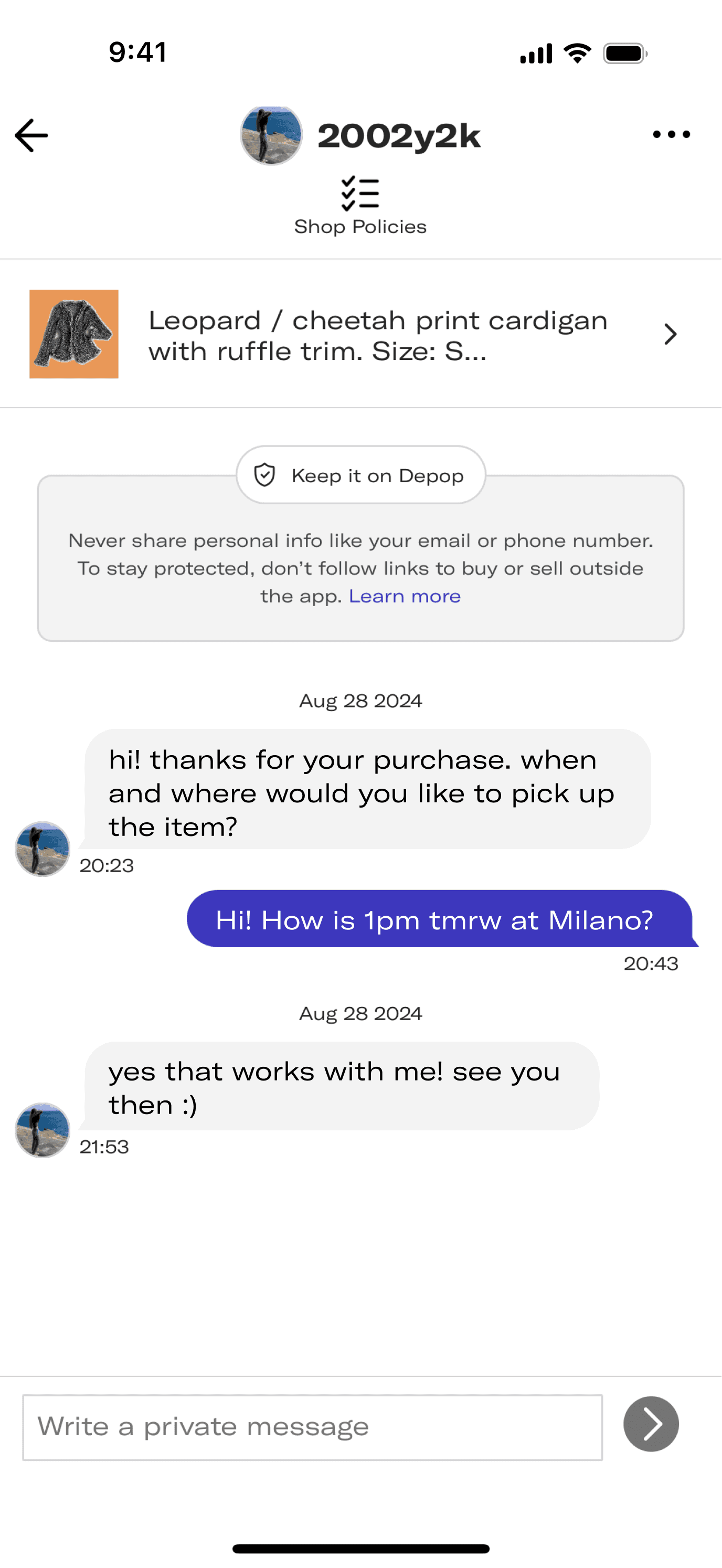
Social-nature of fashion and thrifting leveraged through DMs for meetups and purchases
IMPACT
An experience that fixes, and builds
Depop Campus Circle addresses all the major key blockers we uncovered through our research: shipping fees and hassle, fit uncertainty, lag time, and more.
Careful consideration of the implementation led to improvements in safety concerns, and seamless integration, increasing interest amongst users.